|
Powder looks harmless until it starts to clump, stick or refuses to flow out of the hopper. Then it quickly becomes a costly affair. Delft Solids Solutions in Wateringen is very familiar with these problems. The company is a CRO (contract research organisation) specialising in the physical characterisation of solids, particularly powders and granules. In this article, you’ll find out what Solids Solutions does. You’ll also learn how a powder flow analyser helps with flow problems and what you can do to prevent powder caking. About Solids Solutions: over 40 years of powder expertiseSolids Solutions has over 40 years’ experience in the behaviour of (bulk) powders, porosity and specific surface area, particle size and shape, and chemical composition. Its clients come from the pharmaceutical, chemical and petrochemical industries. The automotive, food and animal feed sectors, as well as the building materials industry, also make use of its services. The work is based on three pillars:
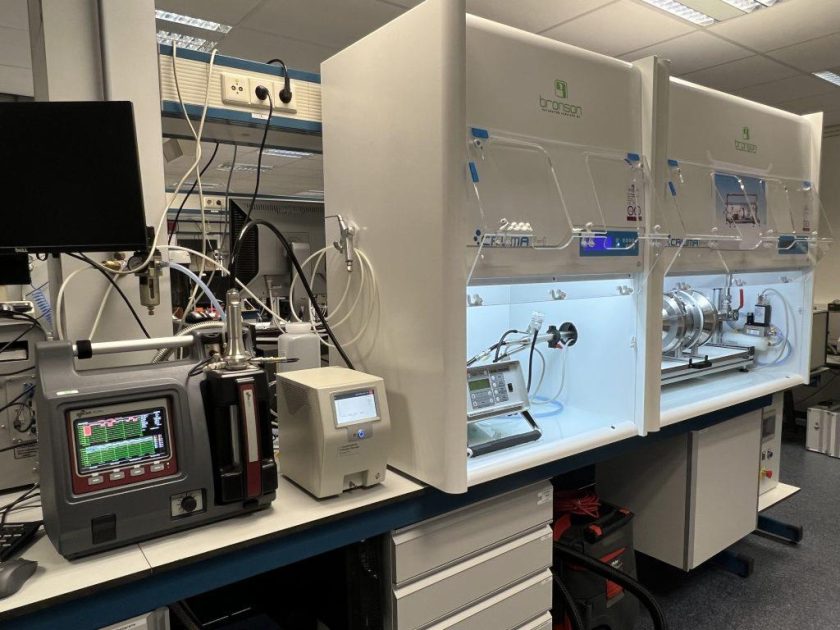
The powder flow analyser: understanding how powder flowsDoes your powder flow smoothly, or does it falter? This is a key question when it comes to mixing, dosing, filling and emptying silos. A powder flow analyser measures how a powder behaves when it starts moving from a state of rest. Such measurements help prevent blockages and irregular dosing. Think of a sachet that is sometimes too full and sometimes too empty. Solids Solutions, for example, uses the Hosokawa powder tester. This determines flowability using seven mechanical and three auxiliary measurements. These include the angle of repose, compressibility and dispersibility. The results are converted into what are known as Carr indices. For powder in silos and hoppers, the lab also uses ring-slide tests, in which varying loads simulate the height within the silo. There is also a powder rheometer, which measures friction within a powder bed. It can even operate under controlled temperature and humidity conditions. Powder caking: when particles stick togetherAnyone who has ever kept a jar of sugar or stock powder in a damp kitchen will be familiar with the phenomenon. Powder caking occurs when fine particles start to stick together and form larger lumps. This leads to blocked equipment, inconsistent dosing and lower product quality. In industry, this is a common and costly problem. The cause often lies in moisture, temperature or pressure during storage. Solids Solutions therefore investigates stickiness and caking as a function of temperature and relative humidity. Uniaxial compression tests are used to determine how strongly a powder ‘cakes’, for example in a big bag. Based on the results, various solutions are possible. You can adjust the composition, add an anti-caking agent or change the process conditions. From lab to productionThe lab is equipped with ball mills, mixers, granulators, coating equipment, a fluidised bed and a setup for pneumatic conveying. This enables Solids Solutions to bridge the gap between gram-scale testing and pilot-plant operations. This is particularly useful for start-ups and scale-ups looking to develop their product but not yet ready to work with hundreds of kilograms. |
| https://www.solids-solutions.com/ |